

Have you been thrilled over the past 6-8 weeks to see your direct website traffic spiking? Wondering excitedly about the potential of more loyal customers or supporters? What a great gift heading into the holidays!
Sadly, we must be Scrooge and let you know that it appears most sites are experiencing this spike due to bot traffic from China and Singapore.
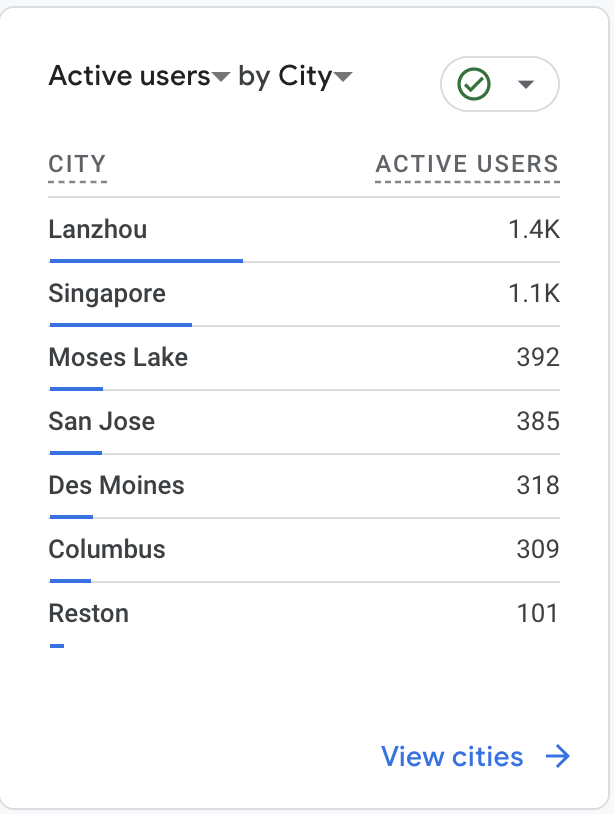
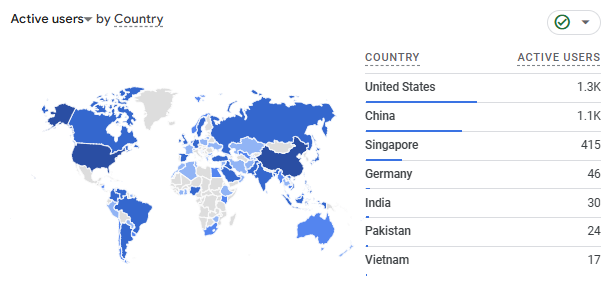
Why is my website getting so much direct traffic from China and Singapore?
Users began to notice unusual traffic in mid-September and it is now very widespread. Our clients are experiencing this no matter their platform – WordPress, Weebly, Squarespace – or whether they’re using a Customer Relationship Management (CRM) tool or an Association Management System (AMS). They are, at minimum, seeing about 10% of traffic from these countries. But most are around 50%.
One client’s monthly average number of users visiting their site from January to August was 620. In September, that more than doubled to 1,348. In October, it rose to 2,025. In November, it rose even further to 3,521. Their analytics show more than 30% of the traffic is from Lanzhou (China) and more than 20% is from Singapore.
Another client is seeing a rapid rise in direct visits to their 404 error page. In normal times, users are directed to the 404 page when they attempt to visit a page on your site that doesn’t exist. With this bot traffic, the data shows the session begins on the 404 page, rather than originating from another page and being directed there.
Is the direct traffic from China and Singapore bots negatively impacting my website’s SEO?
According to the limited information out there, the bot traffic, also known as ghost sessions, is not affecting your site’s security, search rankings, or actual user activity. However, it is significantly skewing your analytics. While your analytics show skyrocketing page views and new user visits from direct traffic, engagement (engaged sessions, event count, time on page) is very low because the bot stays on the site for only seconds.
This clearly makes it challenging to use your analytics to understand user engagement, monitor trends, identify issues, and take any action based on that data. You can’t act on data you can’t trust.
How do I exclude the bot traffic from China and Singapore in GA4?
Google has confirmed that the activity is not human, and the bots are bypassing its internal standard filtering systems. They say they are working on a permanent fix. In the meantime, there are a few options to help you sift through the junk data to get some real insights:
Check your in-platform analytics. We compared Google Analytics data and in-platform analytics for two of our clients, and it appears some platforms may be filtering out at least some of the bot traffic. The in-platform analytics, one on Weebly and the other on Squarespace, showed November site visits similar to their 2025 monthly averages, while their Google Analytics were more than double.
Manually filter out the bot traffic in Google Analytics. This article outlines how to create custom reports to give you a view of your human traffic. This doesn’t permanently rid you of your bot visits but can give you a better view of real data.
If you use Cloudflare, you may be able to block the traffic. The same article notes Cloudflare users are seeing success in blocking some of this traffic.
This flood of traffic is frustrating and, unfortunately, none of the solutions above will be a guarantee. Until Google is able to resolve the problem and strengthen their spam filtering, your analytics are going to be… complicated. Explore the in-platform analytics and filtering options to drill down on your data to identify the human traffic.
And hopefully we’ll have a Christmas miracle and kick off 2026 with fresh, accurate, human-driven website analytics!